
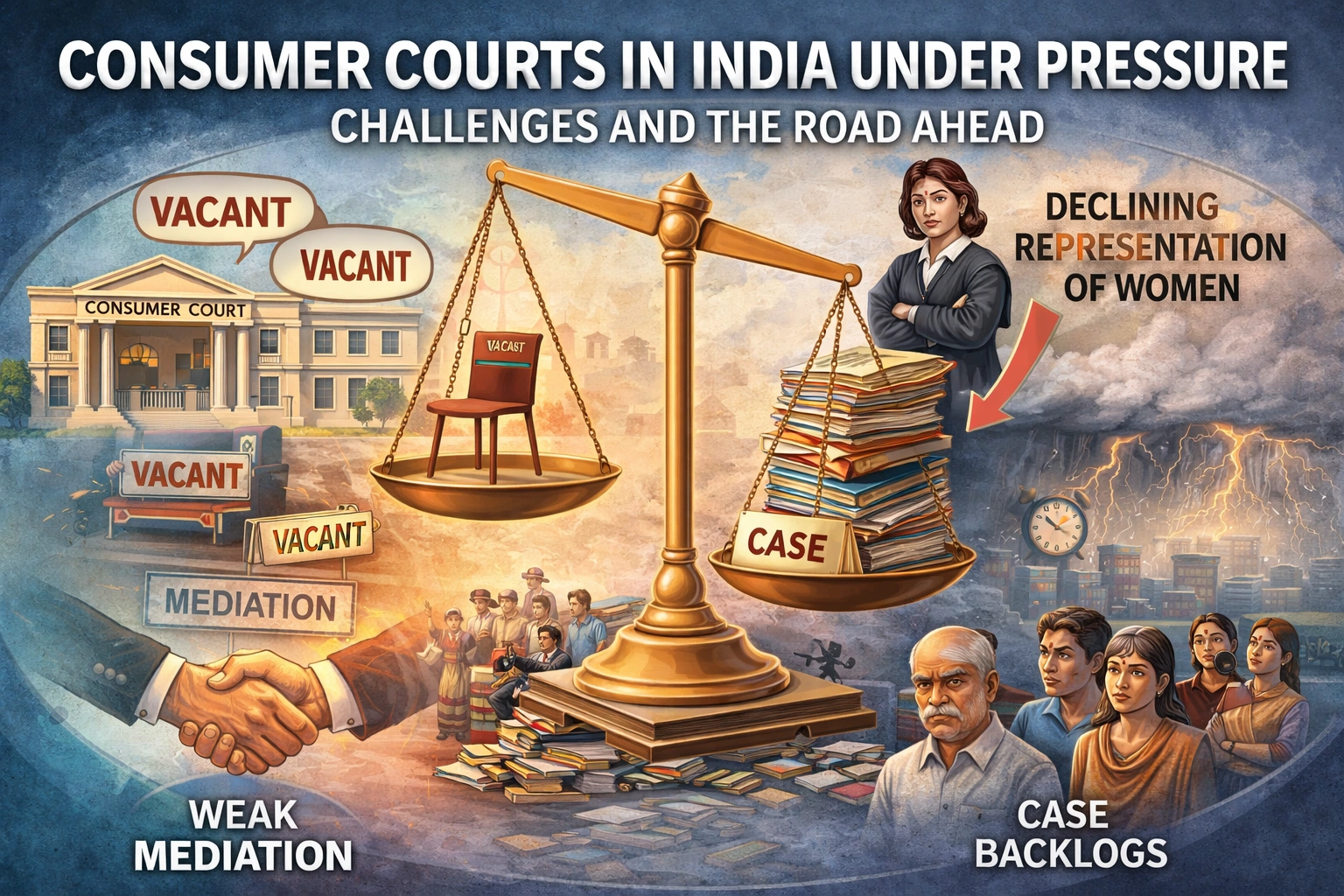
India’s consumer protection framework has long been considered a vital pillar in safeguarding the rights of citizens. However, recent findings from the India Justice Report raise serious concerns about the health of this system. The Consumer Justice Report 2026 highlights structural weaknesses in the functioning of Consumer Disputes Redressal Commissions, including rising vacancies, declining representation of women, and underutilization of mediation mechanisms.
These issues point to a system under increasing strain, struggling to keep pace with growing consumer disputes in a rapidly evolving economy.
Table of Contents
ToggleRising Vacancies in Consumer Courts
One of the most pressing concerns identified in the report is the significant number of vacancies across consumer courts at district, state, and national levels. These vacancies directly impact the ability of the system to handle cases efficiently.
When key positions remain unfilled, the burden on existing members increases, leading to delays in case resolution. This backlog not only frustrates consumers but also undermines confidence in the justice delivery system.
The report indicates that despite the growing number of disputes, staffing levels have not kept up, creating a mismatch between demand and capacity.
Explanation:
This section explains the issue of vacancies in consumer courts. It highlights how unfilled positions lead to delays, increased workload, and reduced efficiency in handling cases.
Declining Representation of Women
Another significant concern is the declining share of women in consumer dispute redressal bodies. Gender diversity is essential for ensuring balanced decision-making and inclusive justice.
The report notes that fewer women are being appointed to these positions, reversing earlier progress toward gender representation. This decline raises questions about equal opportunities and inclusivity within the system.
A diverse bench can better understand and address a wide range of consumer issues, making representation a critical factor in effective justice delivery.
Explanation:
This section focuses on gender representation. It explains why the declining presence of women is a concern and how diversity contributes to fair decision-making.
Weak Adoption of Mediation Mechanisms
Mediation is widely recognized as an effective alternative dispute resolution method that can reduce the burden on courts. However, the report highlights that mediation remains underutilized in consumer disputes.
Despite its potential to resolve cases quickly and amicably, many commissions have not fully integrated mediation into their processes. This results in more cases proceeding through lengthy formal hearings.
Encouraging mediation could significantly improve efficiency and reduce case backlogs, but its adoption requires better awareness and institutional support.
Explanation:
This section discusses mediation as a solution. It explains its benefits and why its limited use is a missed opportunity for improving efficiency.
Infrastructure and Resource Constraints
The report also points to inadequate infrastructure as a major challenge facing consumer courts. Many commissions operate with limited physical and technological resources.
Poor infrastructure can hinder the smooth functioning of courts, affecting everything from case management to accessibility for litigants. In some cases, outdated systems slow down administrative processes.
Investing in modern infrastructure and digital tools is essential for improving the overall efficiency and accessibility of the system.
Explanation:
This section explains the role of infrastructure. It highlights how inadequate resources impact court functioning and the need for modernization.
Case Backlogs and Delayed Justice
The combination of vacancies, limited mediation, and infrastructure challenges has led to increasing case backlogs. Delayed justice is a major concern for consumers seeking timely resolution of their grievances.
Prolonged cases can discourage individuals from pursuing legal remedies, weakening the purpose of consumer protection laws. Delays also increase costs for both parties involved.
Addressing backlogs requires a comprehensive approach that tackles staffing, processes, and resource allocation simultaneously.
Explanation:
This section focuses on case delays. It explains how multiple factors contribute to backlogs and why timely justice is essential.
Insights from the Consumer Justice Report 2026
The Consumer Justice Report 2026 provides a detailed assessment of the current state of consumer courts in India. Based on RTI data and official records, it offers a comprehensive view of systemic challenges.
The findings highlight gaps in staffing, diversity, infrastructure, and case management. These issues collectively impact the effectiveness of the consumer dispute resolution system.
The report serves as a crucial tool for policymakers, offering data-driven insights that can guide reforms and improvements.
Explanation:
This section explains the significance of the report. It highlights how data and analysis help identify problems and inform solutions.
The Importance of Consumer Justice in a Growing Economy
As India’s economy expands, the number of consumer transactions continues to rise. This growth inevitably leads to more disputes, making an efficient redressal system essential.
Consumer courts play a key role in maintaining trust between businesses and customers. A strong system ensures accountability and protects consumer rights.
Weaknesses in this system can have broader economic implications, affecting confidence and market stability.
Explanation:
This section connects consumer justice to the economy. It explains why an effective system is important for growth and trust.
Steps Toward Strengthening the System
Addressing the challenges highlighted in the report requires coordinated efforts from multiple stakeholders. Filling vacancies should be a top priority to ensure adequate staffing.
Promoting gender diversity through targeted policies can help restore balance and inclusivity. Additionally, integrating mediation more effectively can reduce the burden on courts.
Investment in infrastructure and digitalization is also critical for improving efficiency and accessibility. These measures can collectively strengthen the consumer justice system.
Explanation:
This section outlines possible solutions. It explains practical steps that can improve the functioning of consumer courts.
Conclusion: A System in Need of Urgent Reform
The findings of the Consumer Justice Report 2026 paint a concerning picture of India’s consumer dispute redressal system. Rising vacancies, declining representation of women, and limited use of mediation highlight deep structural issues.
However, these challenges also present an opportunity for meaningful reform. By addressing these gaps, India can build a more efficient, inclusive, and responsive consumer justice system.
Ensuring timely and fair resolution of disputes is not just a legal necessity—it is fundamental to protecting consumer rights and sustaining economic growth.
thedigitshub.com thedigitshub.com thedigitshub.com thedigitshub.com thedigitshub.com thedigitshub.com thedigitshub.com thedigitshub.com thedigitshub.com thedigitshub.com thedigitshub.com thedigitshub.com thedigitshub.com thedigitshub.com thedigitshub.com thedigitshub.com thedigitshub.com thedigitshub.com thedigitshub.com thedigitshub.com thedigitshub.com thedigitshub.com thedigitshub.com thedigitshub.com thedigitshub.com thedigitshub.com thedigitshub.com thedigitshub.com thedigitshub.com thedigitshub.com thedigitshub.com thedigitshub.com thedigitshub.com thedigitshub.com thedigitshub.com thedigitshub.com thedigitshub.com thedigitshub.com thedigitshub.com thedigitshub.com thedigitshub.com thedigitshub.com thedigitshub.com thedigitshub.com thedigitshub.com thedigitshub.com thedigitshub.com thedigitshub.com thedigitshub.com thedigitshub.com thedigitshub.com thedigitshub.com thedigitshub.com thedigitshub.com thedigitshub.com thedigitshub.com thedigitshub.com thedigitshub.com thedigitshub.com thedigitshub.com thedigitshub.com thedigitshub.com thedigitshub.com thedigitshub.com thedigitshub.com thedigitshub.com thedigitshub.com thedigitshub.com thedigitshub.com thedigitshub.com thedigitshub.com thedigitshub.com thedigitshub.com thedigitshub.com thedigitshub.com thedigitshub.com thedigitshub.com thedigitshub.com thedigitshub.com thedigitshub.com thedigitshub.com thedigitshub.com thedigitshub.com thedigitshub.com thedigitshub.com thedigitshub.com thedigitshub.com thedigitshub.com thedigitshub.com thedigitshub.com thedigitshub.com thedigitshub.com thedigitshub.com thedigitshub.com thedigitshub.com thedigitshub.com thedigitshub.com thedigitshub.com thedigitshub.com thedigitshub.com thedigitshub.com thedigitshub.com thedigitshub.com thedigitshub.com thedigitshub.com thedigitshub.com thedigitshub.com thedigitshub.com thedigitshub.com thedigitshub.com thedigitshub.com thedigitshub.com thedigitshub.com thedigitshub.com thedigitshub.com thedigitshub.com thedigitshub.com thedigitshub.com thedigitshub.com thedigitshub.com thedigitshub.com thedigitshub.com thedigitshub.com thedigitshub.com thedigitshub.com thedigitshub.com thedigitshub.com thedigitshub.com thedigitshub.com thedigitshub.com thedigitshub.com thedigitshub.com thedigitshub.com thedigitshub.com thedigitshub.com thedigitshub.com thedigitshub.com thedigitshub.com thedigitshub.com thedigitshub.com thedigitshub.com thedigitshub.com thedigitshub.com thedigitshub.com thedigitshub.com thedigitshub.com thedigitshub.com thedigitshub.com thedigitshub.com thedigitshub.com thedigitshub.com thedigitshub.com thedigitshub.com thedigitshub.com thedigitshub.com thedigitshub.com thedigitshub.com thedigitshub.com thedigitshub.com thedigitshub.com thedigitshub.com thedigitshub.com thedigitshub.com thedigitshub.com thedigitshub.com thedigitshub.com thedigitshub.com