
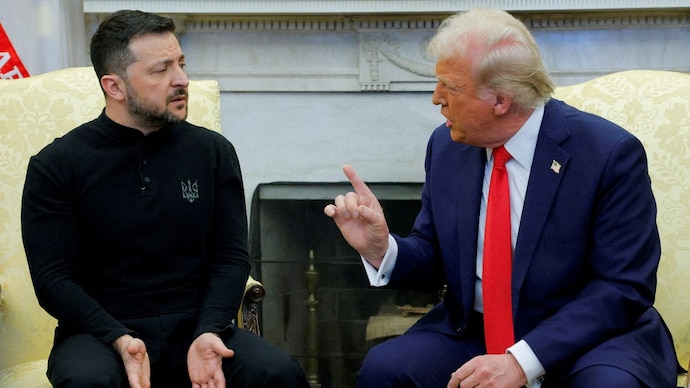
The diplomatic landscape around the Russia–Ukraine war is once again roiled by a bold proposal from the United States. Former U.S. President Donald Trump has revived a 28‑point peace plan, prompting a fierce reaction in Kyiv, unease in Europe, and a tense run-up to a critical Geneva summit. At the heart of the tension: Ukrainian President Volodymyr Zelenskyy’s grim framing of the choice before his country — preserve its dignity or risk losing a key partner.
The Core of Trump’s Proposal
Trump insists his Ukraine peace deal is not “my final offer,” signaling room for negotiation. Crafted by U.S. and Russian representatives, the proposal reportedly demands major concessions from Kyiv: territorial adjustments in Donbas and southern Ukraine, limiting Ukraine’s military to around 600,000 personnel, and permanently ruling out NATO membership. In exchange, Ukraine would receive “reliable security guarantees” and a reconstruction fund, drawing on frozen Russian assets.
Trump has also floated a strict deadline: Zelenskyy must sign by Thanksgiving, though he said an extension is possible if more talks are needed.
toppostng.com | gisthabit.com | cialisonlinetips.com
labelsuperrecords.com | HotelMargHeRitaIschia.com
Zelenskyy’s Dilemma: Dignity or Support
In a somber address to the nation, Zelenskyy warned that Ukraine is confronting “one of the most difficult moments in its history.” He laid out what he called a “very difficult choice”: either accept the plan with all its painful compromises or risk losing essential U.S. backing.
Zelenskyy acknowledged that diplomacy is vital — “we value the efforts of the United States … aimed at ending this war” — but stressed that any genuine peace must guarantee Ukraine’s security and justice. He has named a high-level negotiating team, led by his chief of staff Andriy Yermak and former defense minister Rustem Umerov, to engage with U.S. counterparts in Geneva.
European Allies Push Back
Trump’s proposal has rattled not just Kyiv but also its European allies. Leaders from France, Britain, and Germany have expressed strong reservations: no peace deal can be credible without Ukraine’s full involvement, they argue, and the plan’s current contours risk undermining European security.
At a recent G20 gathering, European leaders jointly pressed back, calling for significant revisions. The plan’s terms — especially territorial concessions and the exclusion of NATO integration — raise red flags about sovereignty and long-term stability.
Moscow’s Reaction: Cautious but Encouraged
While many in the West view the plan as one-sided, Russia has expressed cautious optimism. President Vladimir Putin described the proposal as “a modernised plan” that could “form the basis of a final peaceful settlement.” However, Putin also noted that detailed discussions have not yet begun.
From Moscow’s perspective, the plan could formalize some of its territorial gains and reduce future security risks — a potentially favorable outcome if Kyiv agrees.
Domestic Pressure in Kyiv
Back home, Zelenskyy faces mounting pressure. Public opinion is sharply divided. Some see the deal as necessary to end the war; others condemn it as a forced capitulation. Ukrainian commentators have raised moral and legal objections: the plan reportedly includes broad amnesty for Russian war crimes, a deeply sensitive issue given the atrocities committed on Ukrainian soil.
Moreover, Zelenskyy must balance the desire for a diplomatic resolution with the urgent need to maintain military and intelligence support from the U.S. He has warned of a “very difficult winter” ahead if the deal is rejected — one made more dangerous by energy infrastructure damage and the toll of continued conflict.
Strategic Risks and Opportunities
Risks:
-
Loss of Sovereignty: Accepting the plan could mean formally ceding parts of Ukrainian territory or accepting limitations on its military capabilities.
-
Weakened NATO Aspirations: Excluding Ukraine from NATO membership would close off a major strategic goal.
-
Uncertain Guarantees: The so-called “security guarantees” are vague; without firm western backing, they may not suffice to deter future aggression.
-
Domestic Backlash: Kyiv could face political instability if citizens perceive the deal as humiliating or unfair.
-
European Fracturing: If European allies are sidelined or overruled, it could weaken collective efforts to support Ukraine long term.
Opportunities:
-
Potential Ceasefire: A mutually agreed deal could bring a reduction in violence and open pathways for reconstruction.
-
Economic Reconstruction: Use of frozen Russian assets for rebuilding could accelerate recovery.
-
Long-Term Diplomacy: The process could lay groundwork for a more durable framework of peace and security.
-
U.S. Re-engagement: A deal might solidify a renewed U.S. role in European security architecture — if done carefully.
-
European Role: The Geneva talks allow European powers to reassert their influence and reshape terms to be more balanced.
Geneva: A Pivotal Moment
The upcoming summit in Geneva is shaping up as a critical juncture. Ukrainian and U.S. security advisers will meet there, joined by representatives from key European nations including France, the U.K., and Germany. The goal: refine, renegotiate, or reject portions of the controversial plan.
From Kyiv’s perspective, Geneva represents the best opportunity to recalibrate the draft proposal. Zelenskyy has made it clear his delegation will defend national interests, push back on unpalatable concessions, and seek stronger, legally binding guarantees.
For the United States, the summit is equally consequential. Trump’s insistence on a deal — coupled with the public deadline — lays bare his willingness to apply maximum pressure. At the same time, his comment that the proposal is not final suggests he is open to compromise, signaling potential flexibility.
What’s at Stake
The stakes of this diplomatic moment could not be higher:
-
A rejected deal could escalate tensions. If Ukraine refuses, the U.S. threat to cut intelligence or military support looms large.
-
A bad deal could destabilize Ukraine’s future sovereignty and invite criticism that Kyiv has surrendered too much.
-
A well-negotiated deal, however, could offer a path toward a ceasefire, reconstruction, and a reimagined security architecture — one where Ukraine retains core rights and Europe reasserts its role.
Zelenskyy’s choice may define not just the next phase of this war, but the future of Ukraine’s alliances and sovereignty.
Conclusion
In pushing his 28-point plan, Donald Trump has reignited one of the most sensitive questions in European geopolitics: can peace be brokered without Ukrainian sovereignty being undermined? For Zelenskyy, the deal is a gamble — a high-stakes bid to end the war, but at immense cost. The Geneva summit offers a slim but real chance to reshape the proposal. Whether Ukraine preserves its dignity or folds under pressure may depend on how skilled its negotiators are, how resilient its allies remain, and how much leverage Moscow is willing to concede.
At this inflection point, Ukraine stands at a crossroads: the decisions made now will resonate well beyond the present conflict — for national identity, long-term security, and the very meaning of peace.
