In a political move that signals a major shift in Bihar’s power structure, Chief Minister Nitish Kumar has relinquished the key Home Department after nearly two decades of holding one of the state’s most influential portfolios. The department, historically retained by Nitish regardless of coalition equations, has now been handed over to Deputy Chief Minister Samrat Choudhary of the Bharatiya Janata Party (BJP).
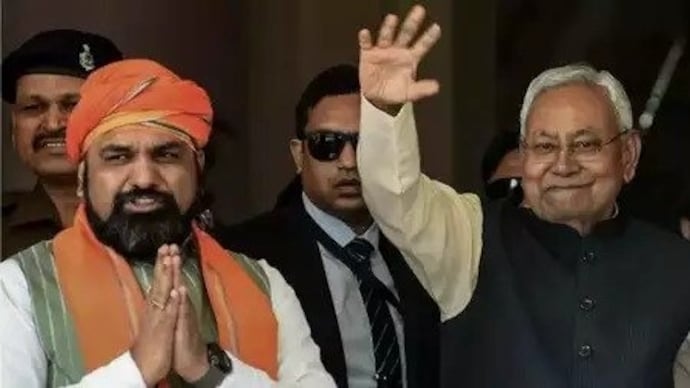
The decision has set off intense political commentary, with analysts calling it a “symbolic transfer of power,” suggesting that the BJP is now taking a stronger leadership role in the state’s governance. Nitish Kumar, who has shifted alliances multiple times in the last seven years, appears to be redefining the administrative balance within the National Democratic Alliance (NDA) government.
A Portfolio Nitish Rarely Let Go
The Home Department has always been Nitish Kumar’s most trusted portfolio—an administrative nerve centre that oversees internal security, law and order, police operations, jailbreaks, crime records, anti-corruption vigilance, and statewide intelligence.
For over 20 years—with brief exceptions—Nitish held on to it personally. It was considered a symbol of stability, control, and confidence, especially in a state historically plagued by crime, political violence, and law-and-order challenges.
This makes the current decision even more significant, as it marks a departure from a long-standing pattern. Political watchers believe that this handover is deliberate, calculated, and reflective of a changing power equation in Bihar politics.
flourandpaper.com | forbesbusinessinsider.com | Higherseducation.com
targeted-medicine.com | publishbookmark.com
Who Is Samrat Choudhary?
Samrat Choudhary, a prominent OBC leader and one of the BJP’s most aggressive faces in Bihar, has served as state BJP president and played a key role in consolidating the NDA alliance before the elections.
He currently holds the position of Deputy Chief Minister alongside Vijay Kumar Sinha, and has been seen as a rising leader within the BJP’s Bihar unit. His appointment as Home Minister now places him at the heart of state administration, giving him both responsibility and political weight.
What This Shift Means Politically
1. BJP Strengthening Its Command
With the Home portfolio shifting to Samrat Choudhary, BJP gains more leverage in the governance of Bihar.
While Nitish continues as Chief Minister, the BJP now holds the most influential ministry in the state machinery.
2. JD(U)-BJP power balance recalibrated
This move is widely seen as Nitish Kumar acknowledging that the BJP is a more assertive partner now.
In earlier years, JD(U) dominated the alliance, and the BJP played the secondary role.
Today, the situation has reversed:
BJP has grown stronger in seat share, leadership strength, voter base, and organisational depth.
3. Nitish Kumar focusing on broader governance
Political strategists believe Nitish may be shifting toward a chief ministerial role that focuses on statewide development, policy coordination, and overall administration rather than day-to-day policing and law-and-order control.
With coalition dynamics changing frequently in Bihar, this move might also help Nitish reduce administrative pressure while maintaining political leverage.
Why Nitish Kumar May Have Let It Go
Observers point to several possible reasons behind the decision:
1. Alliance Diplomacy
Nitish, who recently returned to the NDA after breaking away from the INDIA bloc, may be making a goodwill gesture to reassure the BJP of stability and cooperation.
2. Pressure from BJP’s central leadership
The BJP may have insisted on controlling the Home Department to ensure greater administrative authority in the state.
3. Preparing a succession plan—or political exit strategy
Nitish Kumar, now in his 10th term as Chief Minister, has often hinted at wanting to reduce personal workload.
He may be preparing the ground for a smoother transition of political leadership within the NDA framework.
4. Tactical move to avoid criticism
Bihar often suffers negative media attention due to crime rates or policing lapses. By handing the Home Department to Samrat Choudhary, Nitish reduces personal political liability on law-and-order issues.
Reactions from Political Circles
JD(U) Response
JD(U) leaders have called the decision “collective and strategic,” emphasizing that Nitish Kumar still heads the government and retains full authority over governance.
BJP Response
BJP leaders welcomed the move, calling it “a natural progression” of the party’s growing administrative role. They also praised Samrat Choudhary as a “capable and energetic leader.”
Opposition Reaction
The RJD, Congress, and Left parties have criticised the decision, claiming it reflects a “weakening Nitish Kumar” and “BJP dominance.”
Some opposition leaders argued that Nitish is slowly being sidelined within his own coalition.
What It Means for Governance and Law & Order
With Samrat Choudhary taking over, several changes are expected:
1. Hardline policing approach
Samrat is known for tough public statements and is likely to push for stricter policing, faster action against criminals, and more accountability within the police department.
2. BJP’s imprint on administrative decisions
Key appointments—SPs, DIGs, administrative transfers—may now reflect BJP priorities more directly.
3. Focus on cybercrime and corruption cases
Choudhary has long spoken about strengthening anti-corruption mechanisms, improving cyber-policing, and deploying more technology in policing.
4. More transparency and public communication
Being extremely vocal and media-savvy, Samrat may increase public updates, press briefings, and communication around crime and policing.
A Shift That Will Shape Bihar’s Political Future
The transfer of the Home Department is not just an administrative change—it is a statement.
With this move, Nitish Kumar has signaled that he is willing to share or surrender more administrative control than ever before.
For the BJP, it marks an important milestone in expanding its influence from electoral politics to administrative command in Bihar.
For Nitish, it may be part of a larger political strategy to maintain relevance, manage alliances, and navigate the complexities of Bihar’s evolving political landscape.